NASA’s Voyager 1 Reaches Historic One Light Day Milestone
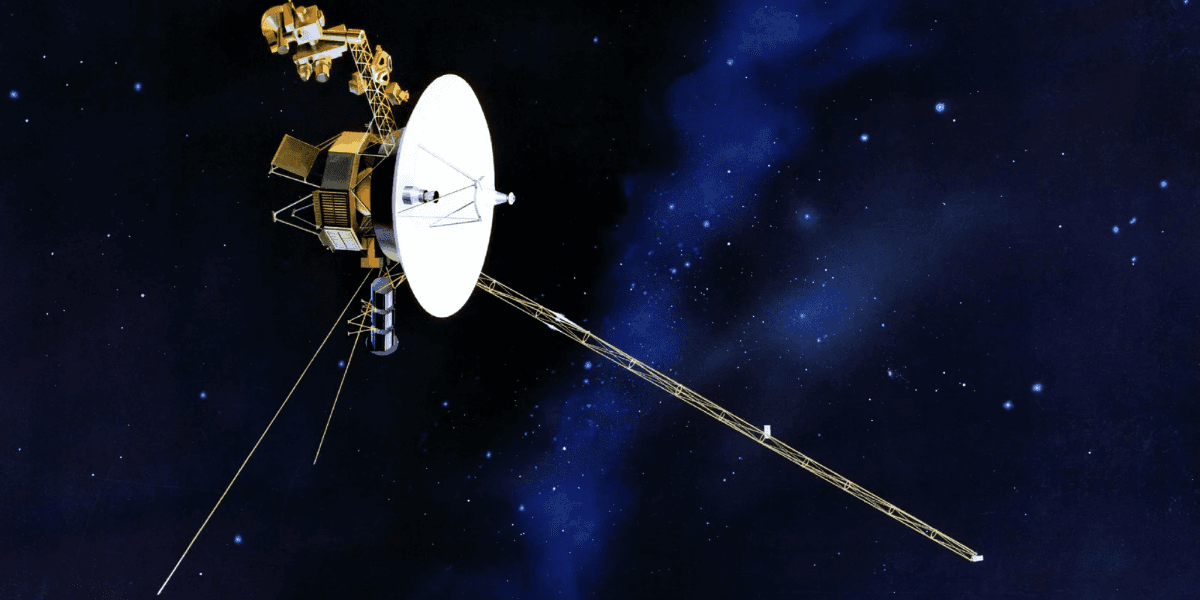
Voyager 1 reaches a historic distance from Earth, marking a remarkable achievement in nearly five decades of space exploration.
A Historic Moment Nearly 50 Years in the Making
Nearly five decades after leaving Earth, NASA's Voyager 1 spacecraft has reached a milestone no other human made object has achieved. On November 18, 2026, the spacecraft traveled approximately 16.1 billion miles from Earth, reaching a distance known as one light day.
The achievement represents an extraordinary moment in the history of space exploration. Launched in September 1977, Voyager 1 has spent nearly 49 years traveling through space, collecting scientific information and expanding humanity's understanding of the universe.
The milestone also carries a special connection to Southern California. NASA's Jet Propulsion Laboratory (JPL), located in Pasadena and managed by the California Institute of Technology, oversees the Voyager mission. Scientists and engineers at the facility continue working to keep the aging spacecraft operational as it explores a region of space never visited by another human made object.
What Does One Light Day Actually Mean?
A light day is a measurement of distance rather than time. It describes how far light travels in 24 hours at approximately 186,000 miles per second.
For Voyager 1, reaching this distance means that a radio signal traveling from Earth to the spacecraft takes approximately 24 hours to arrive. A response from the spacecraft requires another 24 hours to return.
NASA calculated that Voyager 1 reached the milestone at 2:16 a.m. Pacific Standard Time on November 18. At that moment, the spacecraft was approximately 16.094 billion miles, or 25.902 billion kilometers, from Earth.
This distance illustrates the extraordinary scale of interstellar exploration. Even though radio signals travel at the speed of light, communicating with Voyager 1 now requires approximately two days for a complete exchange.
According to NASA, the spacecraft is traveling at approximately 38,000 miles per hour. Despite this speed, its journey to one light day has taken almost half a century.
The milestone does not represent a sudden change in the spacecraft's operation or environment. Instead, it provides a remarkable measurement of how far human engineering has carried an object beyond our planet.
The Mission That Changed Our Understanding of Space
Voyager 1 launched on September 5, 1977, as part of NASA's ambitious program to explore the outer planets.
Its original mission focused on studying Jupiter and Saturn, including their moons, atmospheres, magnetic fields, and surrounding environments.
The spacecraft delivered important discoveries during its planetary encounters. Its observations helped scientists understand Jupiter's complex atmosphere, active volcanic activity on its moon Io, and the intricate structure of Saturn's rings.
After completing its primary planetary objectives, Voyager 1 continued its journey toward the outer boundaries of the Sun's influence.
In August 2012, it became the first human made spacecraft to enter interstellar space after crossing the heliopause. This boundary separates the region dominated by the Sun's solar wind from the surrounding interstellar environment.
Its twin spacecraft, Voyager 2, crossed the same boundary in November 2018.
Together, the two probes remain the only spacecraft to have operated beyond the heliosphere. Their observations provide scientists with valuable information about magnetic fields, charged particles, and conditions in interstellar space.
These measurements help researchers investigate how the Sun influences its surrounding environment and where that influence gradually gives way to the wider galaxy.
A Remarkable Achievement Despite Technical Challenges
Voyager 1's historic milestone comes at a time when the spacecraft is facing the limitations of aging technology.
After decades in space, its equipment has experienced several technical problems. NASA engineers have developed power saving strategies and creative engineering solutions to keep essential systems operating.
The spacecraft relies on a radioisotope power system that generates electricity from the natural decay of plutonium. Its available electrical power gradually decreases over time, requiring engineers to make difficult decisions about which instruments and systems can remain active.
Another concern emerged on November 14, when the mission team discovered that Voyager 1 had stopped transmitting science and engineering data.
NASA reported that its Deep Space Network antenna in Canberra, Australia, continued receiving the spacecraft's carrier signal, indicating that communication had not completely disappeared. However, the expected scientific information was not arriving.
Engineers began investigating the problem and preparing possible recovery steps.
Despite the interruption, NASA could still determine the spacecraft's distance using established trajectory calculations and its carrier signal. The agency planned to confirm the one light day milestone after receiving the relevant signal on November 19.
This distinction is important. Reaching the milestone and receiving confirmation of it are separate events because of the enormous communication delay.
Why the Achievement Matters to Southern California
The Voyager mission has a particularly strong connection to Southern California through NASA's Jet Propulsion Laboratory in Pasadena.
For decades, JPL scientists and engineers have managed some of America's most important robotic space exploration missions. Its work includes planetary research, spacecraft development, and scientific investigations of distant worlds.
Voyager 1 demonstrates the long term value of this expertise. The spacecraft was designed during a very different technological era, yet it continues providing information that modern researchers cannot easily obtain through other missions.
For students, educators, and aspiring engineers across California, its journey also represents the importance of scientific curiosity, technical innovation, and long term investment in research.
The mission demonstrates that discoveries do not always happen immediately. Some of the most valuable scientific achievements require patience, continuous observation, and generations of dedicated researchers.
What Comes Next for Voyager 1?
NASA intends to keep Voyager 1 operating for as long as its remaining power and equipment allow.
The spacecraft will continue moving farther from Earth, even as engineers work to preserve its remaining scientific capabilities. Its twin, Voyager 2, is also continuing its journey through interstellar space.
Both spacecraft carry the famous Golden Record, a collection of sounds, images, and greetings representing life and culture on Earth. The records were designed as symbolic messages to any potential discoverers in the distant future.
Although neither spacecraft is expected to operate forever, their scientific contributions will remain important long after communication eventually ends.
Voyager 1's November 18 milestone offers a powerful reminder of what sustained scientific exploration can accomplish. Nearly 50 years after launch, a spacecraft built by human hands has traveled so far that even light requires an entire day to reach it.
For NASA and the scientific community, the achievement is more than a distance record. It is a lasting demonstration of human curiosity, engineering determination, and the desire to understand what lies beyond our world.

Socal Journal Contributor
Covers culture and lifestyle, from how Southern California lives to what it makes of itself.
This article features partner, contributor, or branded content from a third party. Members of the Socal Journal editorial staff were not involved in the creation of this content. All views and opinions are those of the contributor alone.
You May Also Like

United Airlines Outage Delays Flights Across U.S. Airports
SpaceX Makes History With First Starship Orbital Catch

Southern California Hospital Discharge Planning: How RASCC Helps With Difficult Post-Acute and Assisted Living Placements
Santa Monica Weighs 301 Affordable Homes in Downtown Plan

Seal Beach Warns Residents About King Tides and Winter Storm Risks