
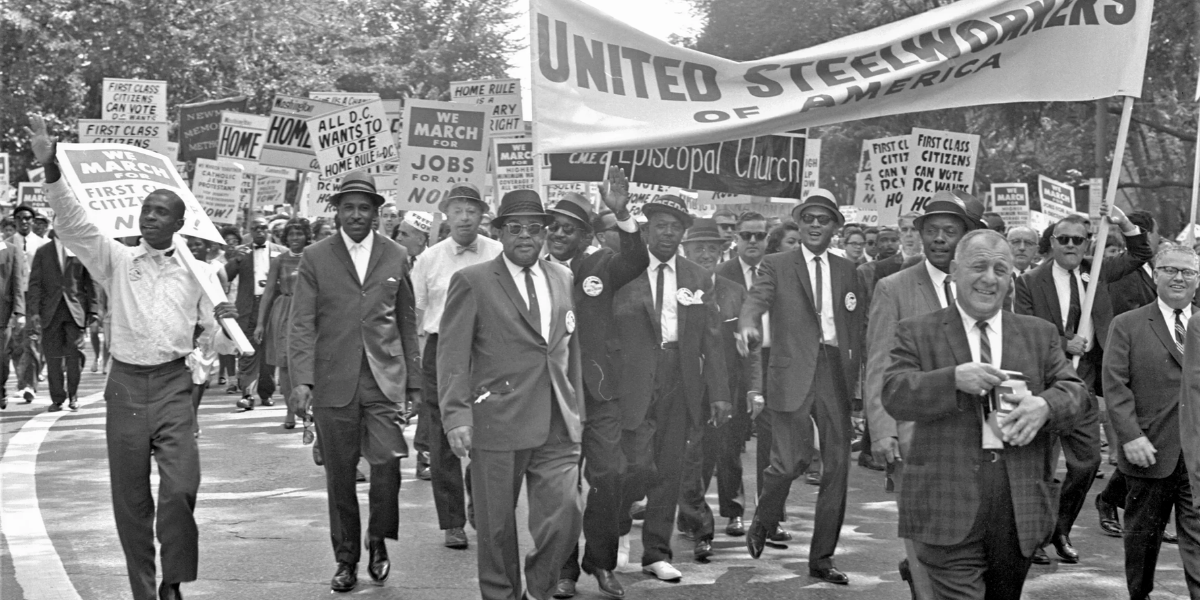
Washington, D.C. , On Saturday, February 7, 2026, tens of thousands of young workers, labor union members, students, and community allies gathered in the nation’s capital for the Young Worker March on Washington, one of the largest labor‑focused demonstrations of the year. The event, organized by the American Federation of Government Employees (AFGE) in partnership with the American Federation of Labor and Congress of Industrial Organizations (AFL‑CIO) and other labor groups, aimed to highlight the economic challenges facing young workers and press for federal policy reforms.
A Groundswell of Youth and Labor Voices
Participants began assembling at the Hyatt Regency Washington on Capitol Hill in the late morning before marching toward the United States Capitol, where a rally took place in front of the iconic steps. Organizers described the march as a historic coming together of labor unions, student organizations, and civic groups to address systemic economic issues affecting workers under 40.
The demonstration was supported by a wide coalition of unions and advocacy organizations, including the National Association of Letter Carriers, National Nurses United, International Union of Painters and Allied Trades, United Auto Workers, and the National Association for the Advancement of Colored People (NAACP).
Key Issues at the Forefront
The march centered on what organizers described as an affordability crisis , a constellation of economic pressures undermining the stability and prospects for young workers. Rally speakers and participants underscored several core demands:
- A Guaranteed Federal Living Wage: Advocates called for wages that adjust with inflation and ensure basic economic security.
- Health Care Reform: Many urged the expansion of public health‑care options and Medicare authority to negotiate lower drug prices.
- Housing and Childcare Solutions: Demonstrators highlighted the urgent need for affordable housing policies and accessible childcare.
- Education Debt Relief: Calls for expanded student loan forgiveness and support for tuition‑free community college were prevalent.
- Support for Union Rights: Organizers pushed for strengthened collective bargaining protections and broader union access for all workers.
A moment of silence was also observed for Alex Pretti, a federal employee and AFGE member whose recent death was commemorated by march leaders as a reminder of the stakes involved in protecting workers’ rights.
Organizers Frame March as Turning Point
Labor leaders described the march as more than a one‑off protest; they articulated it as part of a broader movement to transform “belief into engagement and engagement into power.” According to AFGE leadership, young workers overwhelmingly support union representation , with recent surveys suggesting high pro‑union sentiment among workers under 40 , but actual union membership remains low. Rally speakers argued that mobilizing young workers could reshape labor’s future in the U.S. economy.
Representatives from student groups and civil rights organizations also addressed the crowd, stressing the intersectionality of economic justice with issues such as racial equity and access to quality education. NAACP Youth & College leaders held town halls ahead of the march to ensure that demands reflected the lived experiences of young workers nationwide.
Broader Context and Public Engagement
The protest occurred amid a period of heightened public engagement around work, wages, and labor policy. While the Young Worker March was distinct in its focus on economic conditions for younger demographics, it resonated with other grassroots movements nationwide calling attention to systemic challenges such as housing affordability and student debt burdens.
In addition to the demonstration in Washington, related awareness activities and public forums were held in communities across the country, offering platforms for local voices to contribute to the conversation about workers’ rights and economic policy priorities.
Looking Ahead
Organizers view the momentum generated by the march as a foundation for sustained advocacy. Several union leaders indicated plans to continue community organizing, coalition building, and dialogue with federal lawmakers to advance legislative proposals aligned with the march’s goals.
As participants dispersed in the late afternoon, many expressed hope that the event would signal a new phase of labor activism, one driven by young workers’ desire for long‑term economic stability and fairness in the workplace.
Overall, the Young Worker March on Washington emerged as a high‑profile demonstration of youth and labor solidarity, drawing national attention to vital economic issues and reinforcing ongoing efforts to shape public policy in favor of workers’ economic rights.
Washington, D.C. , On Saturday, February 7, 2026, tens of thousands of young workers, labor union members, students, and community allies gathered in the nation’s capital for the Young Worker March on Washington, one of the largest labor‑focused demonstrations of the year. The event, organized by the American Federation of Government Employees (AFGE) in partnership with the American Federation of Labor and Congress of Industrial Organizations (AFL‑CIO) and other labor groups, aimed to highlight the economic challenges facing young workers and press for federal policy reforms.
A Groundswell of Youth and Labor Voices
Participants began assembling at the Hyatt Regency Washington on Capitol Hill in the late morning before marching toward the United States Capitol, where a rally took place in front of the iconic steps. Organizers described the march as a historic coming together of labor unions, student organizations, and civic groups to address systemic economic issues affecting workers under 40.
The demonstration was supported by a wide coalition of unions and advocacy organizations, including the National Association of Letter Carriers, National Nurses United, International Union of Painters and Allied Trades, United Auto Workers, and the National Association for the Advancement of Colored People (NAACP).
Key Issues at the Forefront
The march centered on what organizers described as an affordability crisis , a constellation of economic pressures undermining the stability and prospects for young workers. Rally speakers and participants underscored several core demands:
- A Guaranteed Federal Living Wage: Advocates called for wages that adjust with inflation and ensure basic economic security.
- Health Care Reform: Many urged the expansion of public health‑care options and Medicare authority to negotiate lower drug prices.
- Housing and Childcare Solutions: Demonstrators highlighted the urgent need for affordable housing policies and accessible childcare.
- Education Debt Relief: Calls for expanded student loan forgiveness and support for tuition‑free community college were prevalent.
- Support for Union Rights: Organizers pushed for strengthened collective bargaining protections and broader union access for all workers.
A moment of silence was also observed for Alex Pretti, a federal employee and AFGE member whose recent death was commemorated by march leaders as a reminder of the stakes involved in protecting workers’ rights.
Organizers Frame March as Turning Point
Labor leaders described the march as more than a one‑off protest; they articulated it as part of a broader movement to transform “belief into engagement and engagement into power.” According to AFGE leadership, young workers overwhelmingly support union representation , with recent surveys suggesting high pro‑union sentiment among workers under 40 , but actual union membership remains low. Rally speakers argued that mobilizing young workers could reshape labor’s future in the U.S. economy.
Representatives from student groups and civil rights organizations also addressed the crowd, stressing the intersectionality of economic justice with issues such as racial equity and access to quality education. NAACP Youth & College leaders held town halls ahead of the march to ensure that demands reflected the lived experiences of young workers nationwide.
Broader Context and Public Engagement
The protest occurred amid a period of heightened public engagement around work, wages, and labor policy. While the Young Worker March was distinct in its focus on economic conditions for younger demographics, it resonated with other grassroots movements nationwide calling attention to systemic challenges such as housing affordability and student debt burdens.
In addition to the demonstration in Washington, related awareness activities and public forums were held in communities across the country, offering platforms for local voices to contribute to the conversation about workers’ rights and economic policy priorities.
Looking Ahead
Organizers view the momentum generated by the march as a foundation for sustained advocacy. Several union leaders indicated plans to continue community organizing, coalition building, and dialogue with federal lawmakers to advance legislative proposals aligned with the march’s goals.
As participants dispersed in the late afternoon, many expressed hope that the event would signal a new phase of labor activism, one driven by young workers’ desire for long‑term economic stability and fairness in the workplace.
Overall, the Young Worker March on Washington emerged as a high‑profile demonstration of youth and labor solidarity, drawing national attention to vital economic issues and reinforcing ongoing efforts to shape public policy in favor of workers’ economic rights.

