
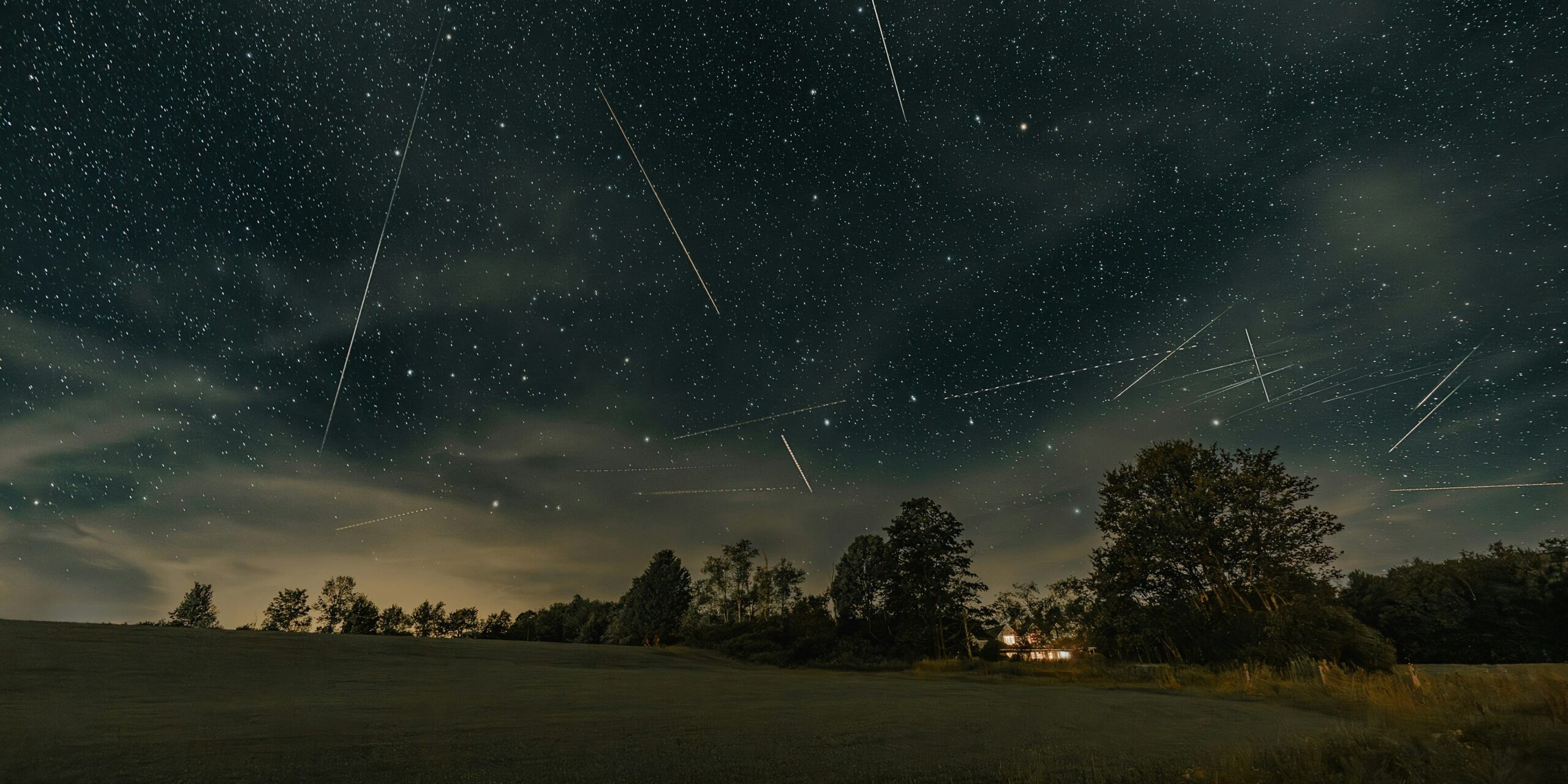
As the Northern Hemisphere observed the winter solstice on December 21, skywatchers across the United States were treated to a fitting astronomical companion to the longest night of the year: the peak of the annual Ursid meteor shower. Though often overshadowed by more prominent meteor events earlier in December, the Ursids offered a quieter yet meaningful opportunity for stargazers to close out the year with a seasonal celestial display.
The Ursid meteor shower occurs each year as Earth passes through a stream of debris left behind by Comet 8P/Tuttle, a short-period comet that orbits the Sun approximately every 13.6 years. As small fragments from the comet’s trail enter Earth’s atmosphere at high speed, they burn up and create brief streaks of light visible from the ground. In 2025, the shower was active from roughly December 17 through December 26, with its most concentrated activity occurring from the evening of December 21 into the pre-dawn hours of December 22.
This year’s Ursid peak aligned closely with favorable observing conditions. A nearly new moon meant minimal lunar light interference, allowing darker skies than in some previous years. Astronomers noted that such conditions are particularly important for viewing the Ursids, which typically produce fewer meteors per hour compared with more intense showers such as the Perseids in August or the Geminids earlier in December. Under clear skies and away from city lights, observers were able to spot an estimated five to ten meteors per hour during peak activity.
While modest in numbers, the Ursids hold a distinct place in the annual meteor calendar. Their peak coincides almost exactly with the winter solstice, a time when nights are longest in the Northern Hemisphere. This timing gives observers an extended window of darkness, increasing the chances of seeing meteors even during a relatively low-activity shower. For many enthusiasts, the Ursids carry symbolic weight, marking a transition point in the seasonal cycle as daylight gradually begins to increase again after the solstice.
Astronomers advised viewers to look toward the northern part of the sky, specifically in the direction of the constellation Ursa Minor, also known as the Little Dipper. The meteors appear to radiate from this region, giving the shower its name. However, experts emphasized that viewers did not need to fix their gaze directly on the radiant point. Because meteors can streak across large portions of the sky, lying back and scanning a wide area often yields the best results.
Weather conditions played a critical role in determining viewing success across different regions of the United States. In areas with clear skies, particularly parts of the Midwest, Southwest, and interior West, observers reported favorable conditions during the peak night. In contrast, cloud cover and winter storms in some northern and coastal regions limited visibility. As with many astronomical events, the Ursids underscored how local conditions can dramatically affect the experience of a global phenomenon.
Unlike some meteor showers associated with larger or faster-moving debris, Ursid meteors tend to travel at moderate speeds and can appear fainter. This makes dark-sky locations especially important for optimal viewing. Astronomers consistently encouraged observers to move away from urban light pollution, allow their eyes time to adjust to the darkness, and avoid using bright screens during observation periods. Even brief patience, experts noted, can significantly improve the likelihood of spotting meteors.
The Ursids also offer scientific value beyond their visual appeal. Because they are tied to a specific comet with a relatively short orbital period, researchers can study how the debris stream evolves over time. In some years, gravitational interactions with Jupiter can cause denser clumps of material to intersect Earth’s orbit, occasionally producing higher-than-average meteor rates. While 2025 was not predicted to be an outburst year, astronomers continue to monitor the shower for variations that can improve understanding of comet behavior and orbital dynamics.
Public interest in meteor showers has grown steadily in recent years, driven in part by increased access to astronomy information through digital platforms and social media. Events like the Ursids, though subtle, contribute to broader engagement with night-sky observation and science education. Planetariums, astronomy clubs, and science organizations often use these events to encourage people to look up, even during colder months when outdoor activities decline.
For many casual observers, the Ursids provided a quieter alternative to larger meteor showers that can attract crowds. Their late-December timing and gentle activity level often result in a more contemplative viewing experience, one that aligns naturally with the reflective atmosphere of the winter solstice and year’s end. Astronomers noted that even seeing a single meteor can be memorable, particularly when paired with the stillness of a long winter night.
As Earth continues its orbit and the Ursid shower gradually tapers off toward the end of December, attention will soon shift to the next major celestial events of the new year. Yet for those who ventured outside on the solstice night, the Ursids offered a reminder that even lesser-known astronomical phenomena can carry beauty, meaning, and a sense of connection to the larger rhythms of the cosmos.

