
NASA Astronauts Complete Key Spacewalk to Prepare International Space Station for Next-Generation Solar Arrays
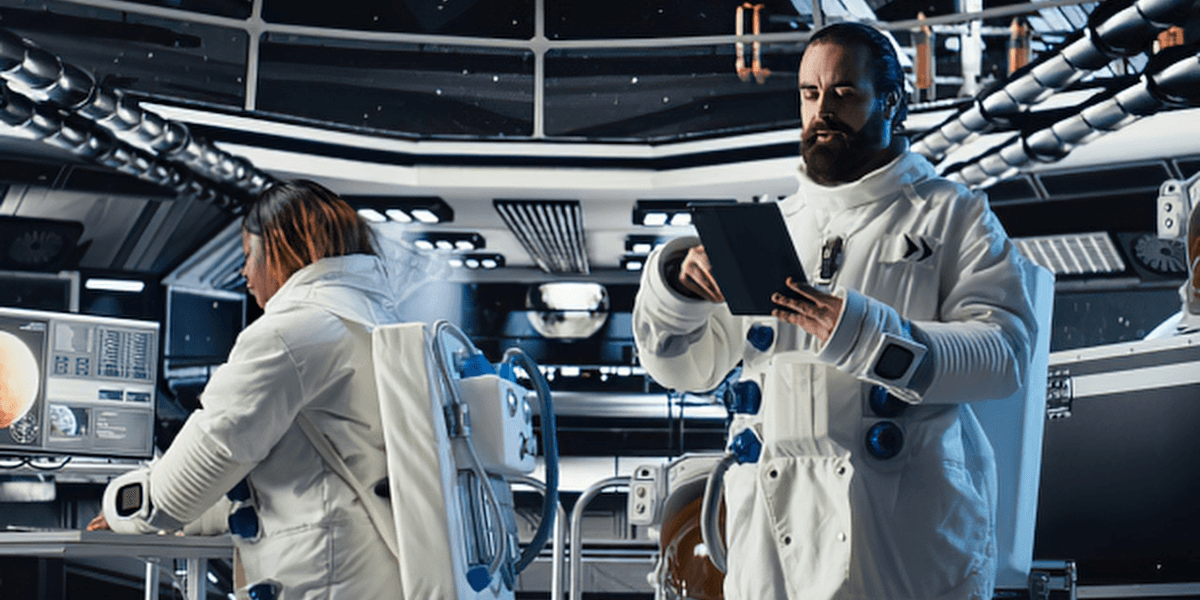
NASA astronauts successfully completed a major spacewalk outside the International Space Station (ISS), marking another important milestone in maintaining the orbiting laboratory and preparing it for future scientific missions.
The mission, officially designated U.S. Spacewalk 96, featured NASA astronauts Jessica Meir and Anil Menon, who ventured outside the ISS to install hardware and modify the station’s electrical systems in preparation for the arrival of an additional International Space Station Roll-Out Solar Array (IROSA). The work is part of NASA’s ongoing effort to modernize the station’s power infrastructure and ensure it remains capable of supporting research and operations through the remainder of its planned service life.
The approximately six-and-a-half-hour extravehicular activity (EVA) also represented a significant personal achievement for Anil Menon, who completed his first-ever spacewalk. Veteran astronaut Jessica Meir, meanwhile, added another EVA to her growing list of spacewalking accomplishments, serving as the lead spacewalker during the mission.
Upgrading the Station’s Power System
The primary objective of the spacewalk was to prepare the ISS’s 3B power channel for the installation of NASA’s seventh Roll-Out Solar Array, scheduled to arrive later this year.
The new IROSA system is designed to supplement the station’s original solar panels, many of which have operated continuously since the early 2000s. Although the original arrays remain functional, decades of exposure to the harsh environment of space have gradually reduced their efficiency. The newer roll-out arrays provide significantly more electrical output while weighing less than previous generations of solar panels.
By increasing available electrical power, NASA can continue supporting scientific experiments, life-support systems, communications equipment, and other critical station operations. The upgrades also help ensure the station remains capable of supporting international research projects through the remainder of its operational life.
Careful Planning Behind Every Spacewalk
Spacewalks remain among NASA’s most technically demanding operations. Before astronauts leave the safety of the ISS, mission teams spend months planning every movement, tool placement, and safety procedure.
During Thursday’s mission, Meir and Menon installed hardware, routed electrical cables, and modified station components necessary for integrating the upcoming solar array. NASA flight controllers in Houston continuously monitored the astronauts while crew members inside the station assisted with spacesuit systems and operational procedures.
Although each task may appear routine, every movement outside the station requires exceptional precision. Astronauts perform these operations while working in the vacuum of space as the ISS travels approximately 17,500 miles per hour in orbit around Earth. Every tool and movement must be carefully managed to ensure both crew safety and mission success.
Supporting Scientific Research
The International Space Station serves as one of the world’s most advanced laboratories dedicated to research in microgravity. Scientists from around the globe use the facility to conduct experiments involving human health, biology, materials science, fluid physics, Earth observation, and numerous other scientific disciplines.
Reliable electrical power is essential for operating hundreds of research projects simultaneously. Modernizing the station’s energy systems allows researchers to continue gathering valuable scientific data while supporting future exploration initiatives. Many discoveries made aboard the ISS have contributed to advances in medicine, engineering, manufacturing, and environmental research on Earth.
NASA continues to invest in station maintenance to maximize scientific output and ensure astronauts have the resources needed to carry out long-term research missions safely.
A Milestone for Anil Menon
The mission also marked an important career milestone for NASA astronaut Anil Menon, who successfully completed his first spacewalk after years of intensive training.
Before becoming an astronaut, Menon built a distinguished career in medicine and aerospace operations. Preparing for a spacewalk requires astronauts to master complex procedures involving spacesuit operations, emergency response, robotics, and station maintenance. Completing an EVA is considered one of the most technically demanding achievements in human spaceflight.
Jessica Meir brought valuable experience to the mission, helping guide the operation and ensuring all planned objectives were completed efficiently and safely.
Looking Ahead
The successful completion of U.S. Spacewalk 96 represents the first of several planned maintenance missions designed to prepare the International Space Station for future upgrades. Additional spacewalks scheduled throughout August will focus on installing communications equipment, connecting new power systems, and performing other essential maintenance tasks.
These ongoing improvements help ensure the ISS remains a reliable platform for international scientific collaboration. For more than two decades, the station has served as a hub where astronauts from multiple countries work together to conduct research that would not be possible on Earth.
As the ISS continues orbiting roughly 250 miles above the planet, infrastructure upgrades such as new solar arrays play a vital role in extending its scientific capabilities. The station continues to provide researchers with opportunities to study how living and working in space can benefit future missions to the Moon, Mars, and beyond.
While rocket launches often capture public attention, routine engineering missions like this spacewalk are equally important. They demonstrate the careful planning, teamwork, and technical expertise required to maintain humanity’s only permanently occupied laboratory in space.
The successful completion of this mission highlights NASA’s continued commitment to advancing scientific discovery, maintaining critical space infrastructure, and supporting international cooperation in space exploration. As preparations continue for future upgrades, the International Space Station remains one of the world’s most valuable platforms for research, innovation, and the pursuit of knowledge beyond Earth.

Socal Journal Contributor
Covers culture and lifestyle, from how Southern California lives to what it makes of itself.
This article features partner, contributor, or branded content from a third party. Members of the Socal Journal editorial staff were not involved in the creation of this content. All views and opinions are those of the contributor alone.
You May Also Like

Your Next Move Launches Founding University Partnership to Give Students Career Clarity Before the Job Search
Lucas Museum Of Narrative Art Takes Center Stage In Los Angeles Ahead Of Public Opening

Black Restaurant Week Returns to Los Angeles, Spotlighting the Region’s Black Culinary Community
Federal Investigation Begins Into Fatal Chatsworth News Helicopter Crash
Los Angeles Valley Glen Development Restrictions Take Effect Under New City Ordinance
