
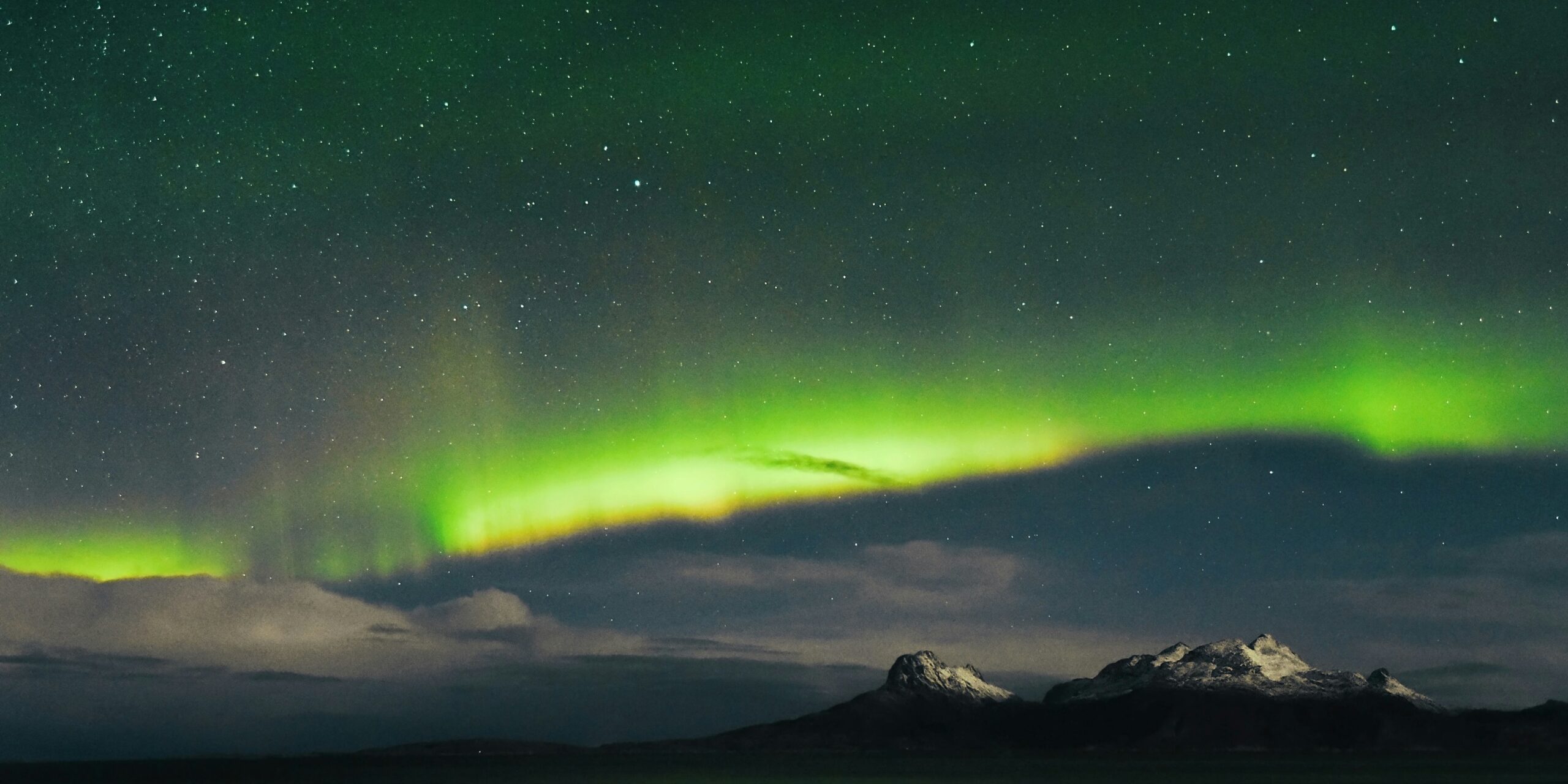
On January 28, 2026, portions of the northern United States were treated to a rare and mesmerizing celestial phenomenon as the northern lights, or aurora borealis, made a spectacular appearance in the night skies. This stunning light display, typically reserved for regions closer to the poles, was visible in areas much farther south, including northern Montana, North Dakota, Minnesota, and northern Wisconsin. The event was the result of a minor geomagnetic storm, classified as a G1 storm, which was triggered by a fast-moving stream of solar wind interacting with Earth’s magnetic field.
The National Oceanic and Atmospheric Administration (NOAA) had forecasted these ideal conditions for several days in advance, giving sky watchers a heads-up about the potential for the auroras to make a rare appearance. The solar wind, which consists of charged particles emitted by the sun, had been traveling toward Earth at high speed and created an interaction with the planet’s magnetosphere. This caused the auroras, which are formed when these charged particles collide with the gases in Earth’s atmosphere, to be visible over a larger area than usual. While the northern lights are most commonly seen in places like Alaska, Canada, and Scandinavia, this geomagnetic storm allowed people in certain parts of the United States to experience the awe-inspiring display of colorful lights sweeping across the sky.
For observers, the aurora borealis provided a breathtaking view of vibrant green, purple, and pink hues dancing across the night sky. Experts from NOAA suggested that the best chance of seeing the northern lights was to find dark, clear skies far away from the artificial lights of urban areas. Light pollution from cities can easily obscure the beauty of the auroras, so experts recommended that sky watchers venture into areas with minimal ambient light for the best experience.
The event, though relatively minor in terms of solar activity, was still significant enough to offer an extraordinary sight for those living in the right locations. The auroras themselves are not just a natural wonder but also a reminder of the dynamic relationship between the Earth and the sun. When solar winds collide with Earth’s magnetic field, the resulting energy can create the stunning light shows that have captured the imagination of people for centuries.
While the January 28th aurora borealis display was a rare and exciting opportunity for those in the U.S. to witness this natural phenomenon, it also highlighted the science behind the northern lights. The phenomenon occurs when solar particles—mainly electrons and protons—travel toward Earth and interact with the Earth’s atmosphere, causing gases like oxygen and nitrogen to emit light. This process is responsible for the striking colors that can appear during the display, with green being the most common and purple and pink being rarer variations.
For those who were able to witness the event, the sight of the northern lights offered a rare moment of connection with nature and the cosmos, reminding viewers of the vast, awe-inspiring forces at work in our universe. While the aurora borealis is generally visible only in regions near the poles, this event proved that under the right conditions, it is possible for even more southerly locations to catch a glimpse of the breathtaking spectacle.

